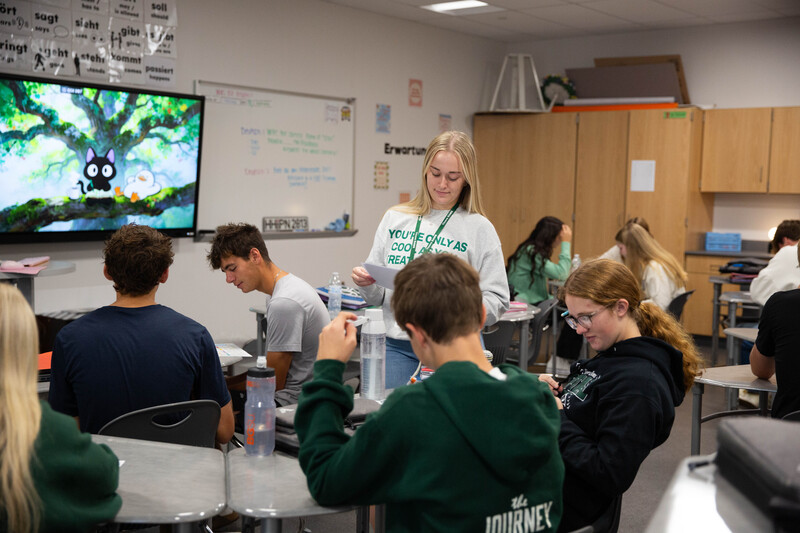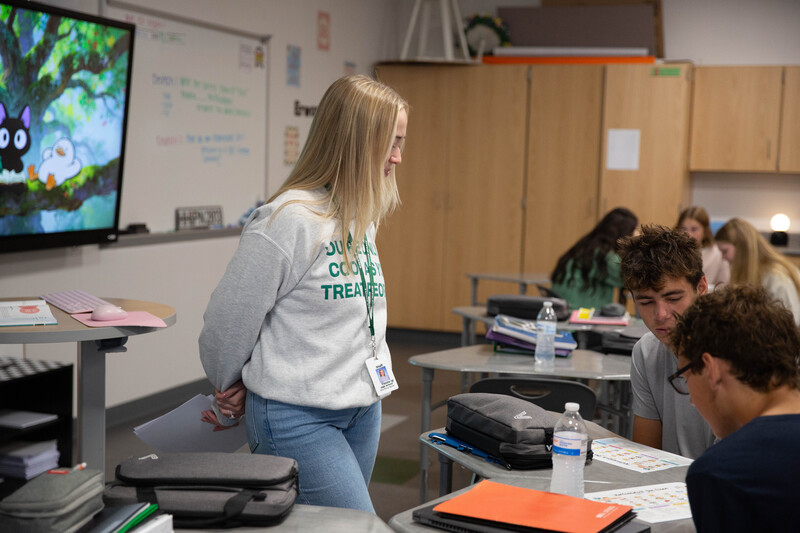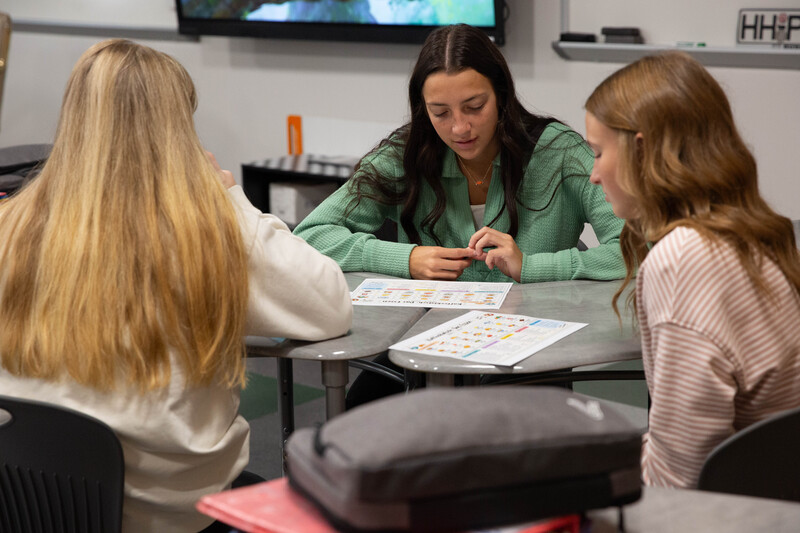
At first glance, Coffee Talk in Miss Emma Sprow’s German classroom might look a little different from a typical class period. Students are paired up chatting with friends, snacks may be making their way around the room, and on some Fridays, donuts and other treats even make an appearance.
There’s just one catch: the conversation has to be in German.
“Coffee talks in German class are exactly what they sound like!” Sprow said. “We eat snacks and practice the language we've been focusing on in class in a very low stakes environment.”
Sprow first experienced this idea as a college student. Once a month, students with varying levels of German experience would gather with a professor and spend about an hour speaking only in German. The professor was there to offer guidance when needed, but the focus was simply on using the language.
Sprow now brings that same concept into her own classroom.
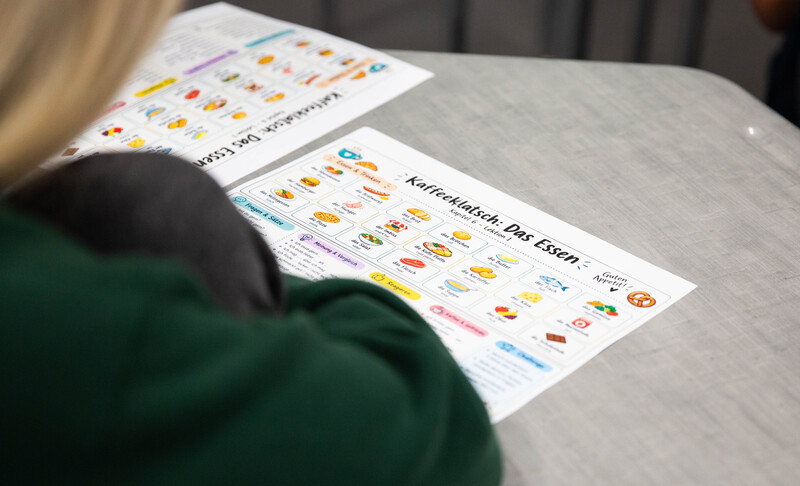
Throughout their regular classwork, students build the vocabulary and grammar skills they need to carry on conversations. For some Coffee Talks, Sprow provides “chat mats” with prompts and vocabulary to help get the conversation started. Other times, students are given starter questions or a specific vocabulary topic. And sometimes, there are very few rules at all.
They can talk about whatever they want, as long as they do it in German.
That freedom is an important part of the experience.
“Language immersion is the most important way students learn the language,” Sprow explained. “When they're able to speak freely without worrying about earning a grade, they're more likely to not worry about making mistakes and speak freely.”
Those conversations also give students an opportunity to ask questions about grammar and vocabulary naturally as they try to communicate their thoughts.
For students, being told they can only speak German can be intimidating at first. Sprow said students are often nervous during their first Coffee Talks of the year. But once they realize mistakes aren't something to fear, their confidence begins to grow.
“Once they realize I simply just want to hear them speaking in the language and there's nothing punitive about any mistakes made, they typically open up a bit more,” she said.
By the end of the year, something else happens: the students start asking for Coffee Talk Fridays themselves.
The treats aren't just an incentive, either. They help Sprow create the welcoming classroom environment she wants for her students while also introducing a small piece of German culture.
“In Germany, they have a similar experience to the British 'Tee Time' with an afternoon coffee and pastry,” Sprow said. “I also am just trying to recreate something they would see in a German-speaking country.”
For Sprow, one of the best parts is seeing students who might not normally be the first to speak begin to join the conversation.
“I enjoy watching my quieter students come out of their shells a little bit,” she said. “This is also a great way for me to learn more about my students and things they enjoy!”
And while a classroom filled with conversation and snacks might look like a break from learning, Sprow says quite the opposite is happening.
“At first glance, a Coffee Talk almost looks like students are having a free day, but there's actually a lot of learning going on!” she said. “Students are expanding their vocabulary, practicing vocab and grammar concepts, and immersing themselves in the language.”
Sometimes learning a language means taking notes, studying vocabulary and understanding grammar.
And sometimes, it means grabbing a treat, sitting down with a classmate and simply having a conversation.
Auf Deutsch, natürlich!